
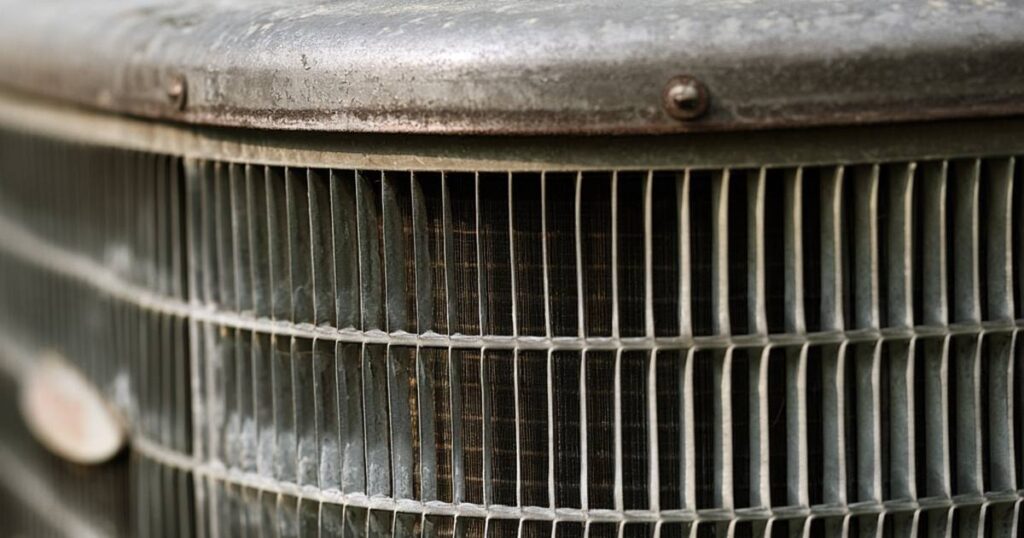
If your AC system was installed before 2010, there’s a good chance it runs on R-22 refrigerant, and R-22 hasn’t been produced or imported in the US since January 2020. The system isn’t illegal. You can keep running it as long as it holds its charge. The problem shows up the day it springs a leak.
Why a leak changes everything
Recharging an R-22 system means buying reclaimed refrigerant from a shrinking stockpile, and that supply gets more expensive every season. A repair that would be routine on a modern system can turn into a four-figure refrigerant bill on an R-22 unit, and it doesn’t fix the leak’s root cause: a coil or line set that’s 15 to 25 years old and corroding. You’d be pouring expensive refrigerant into a bucket with a hole in it.
How to know what you have
Look at the data plate on the outdoor unit. It will list the refrigerant as R-22 (sometimes HCFC-22) or R-410A. Installed before 2010, it’s probably R-22. Between 2010 and 2015, could be either. If the plate is sun-bleached past reading, any tech can tell you in two minutes, and we note it on every diagnostic we run.
What I tell my own neighbors
I live in Prosper, and half the surrounding towns, Little Elm, The Colony, older Plano and McKinney, are full of homes from the late 90s and 2000s hitting this exact wall. Here’s the same advice I give on my own street:
If it’s cooling fine, run it. Don’t replace a working system out of fear. Keep the coils clean, change filters, get it checked each spring so a small issue doesn’t become a leak.
If it needs a refrigerant repair, get both numbers before you spend. The repair price with reclaimed R-22, and a replacement quote sized with a Manual J load calculation. On a 15-year-old system, the repair often costs a third of a new unit and buys you one or two summers. Sometimes it’s still the right move, if you’re selling next year, for example. But make the choice with both numbers in front of you.
If you replace, don’t buy a clone of the old unit. Homes get new windows, insulation, and additions over 20 years. The right size today may not be what’s sitting on the pad. Oversized systems short-cycle and leave the house humid. This is why the load calculation isn’t optional with us.
The upside nobody mentions
Systems from the R-22 era typically ran 10 to 13 SEER. Current equipment starts around 14.3 SEER2 and goes well up from there, so the electric bill drop is real, especially through a Texas summer. Financing spreads the cost, and the repair bills stop.
Not sure what’s on your data plate, or sitting on a repair quote you don’t trust? Call (469) 213-8450 and we’ll give you both numbers in writing. Serving Prosper, Little Elm, The Colony, and all of North DFW. More on AC replacement and AC repair.
Get ahead of the next breakdown
Twice a year, before summer and before the first freeze, I send one short email with the checks worth doing and what I'm seeing fail across North Dallas that season. That's it. No sales blasts, unsubscribe anytime.